CARE Summit: building a stronger European Health Union
26 December 2025
On the 3 and 4 December 2025, the CARE Summit brought together policymakers, health authorities, researchers, clinicians, regional representatives, civil society organisations and industry partners for two days of exchange in Brussels. For EHMA, the Summit was both an important milestone and a responsibility: an opportunity to bring different voices together and to contribute to the discussion on the future of Europe’s health systems.
Organised as part of EHMA’s wider commitment to supporting health management and leadership across Europe, the CARE Summit was conceived as a space for dialogue and shared reflection. Over the course of the event, the discussions confirmed not only the scale of the challenges facing European health systems, but also the importance of maintaining an open and continuous exchange between policy and practice.
A strong need for coordination and practical approaches
From EHMA’s perspective, one of the clearest impressions emerging from the Summit was the strong demand for better coordination across sectors and levels of governance. The diversity of participants and the quality of the discussions showed that health is increasingly understood as an issue that goes beyond the health sector alone, touching economic, social, environmental and digital policies.
As discussions progressed, it became evident that Europe already has a great deal of knowledge, experience and good practices. However, participants often highlighted how difficult it can be to turn this knowledge into action, especially when responsibilities are fragmented or initiatives develop in parallel. This recurring point reinforced the importance of creating shared spaces where experiences can be compared and used more effectively.
The future of EU Health Systems
Several messages from the Summit are particularly relevant for the future of EU health systems.
First, participants underlined the importance of strong governance and cooperation at multiple levels. Many discussions pointed to the need for clearer coordination between EU institutions, Member States, regions and local authorities, in order to ensure that policies are implemented consistently and can have a real impact on the ground.
Second, exchanges around the European Health Data Space (EHDS) highlighted both its potential and the challenges linked to its implementation. While there was broad agreement on the value of health data for improving care and supporting innovation, participants also stressed the need to strengthen skills and communicate clearly with both professionals and citizens. These conversations made clear that digital transformation depends not only on technology, but also on understanding and confidence in how systems work.
Third, crisis preparedness and workforce resilience emerged as shared concerns across countries. Drawing on recent experiences, participants reflected on the importance of flexible planning, continuous learning and sustained investment in people working in health and care systems. A recurring observation was that preparedness should be part of everyday health system management, rather than something activated only in emergency situations.
Finally, the Summit confirmed the growing relevance of One Health and climate-related considerations. Many speakers noted that environmental pressures are already affecting health outcomes. Integrating sustainability into health policy was therefore seen not as an additional objective, but as a necessary step to ensure that health systems remain effective and resilient over time.
What the CARE Summit represents for EHMA
For EHMA, the CARE Summit reaffirmed its role as a platform for dialogue between policy, management and practice. The event showed the value of bringing together perspectives that are often discussed separately and of encouraging exchanges that connect strategic objectives with everyday realities.
The insights gathered during the Summit will inform EHMA’s ongoing work and future activities supporting health system transformation. At the same time, the event helped strengthen relationships across EHMA’s network, reinforcing a shared commitment to cooperation and long-term progress.
Looking ahead
The CARE Summit 2025 confirmed the importance of creating spaces where dialogue can lead to concrete outcomes. Across the two days, discussions consistently pointed to the need for greater coordination with approaches that connect different policy areas, disciplines and levels of governance.
As a key outcome of the Summit, EHMA is developing a Roadmap for a Stronger European Health Union. The Roadmap will bring together the main insights and evidence-informed recommendations co-created during the event, drawing on structured workshops and exchanges with a wide range of stakeholders. Its purpose is to support coordinated and multidisciplinary action, while helping position health as a shared and strategic priority across EU policy areas.
For EHMA, this Roadmap represents a way to ensure continuity beyond the Summit itself. By capturing collective contributions and translating them into a common reference document, EHMA aims to support health leaders and policymakers in aligning efforts and advancing more resilient and integrated health systems across Europe.
Recent News
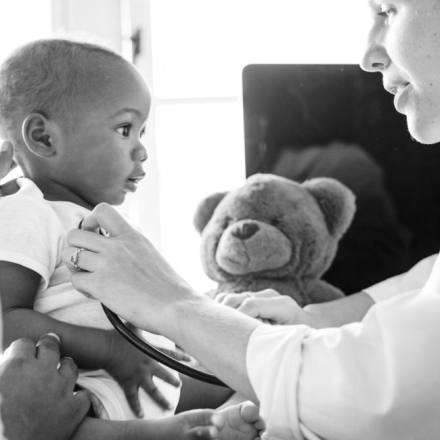
New report published: Consolidating infant rsv prophylaxis – evidence and policy guidance for European health systems.
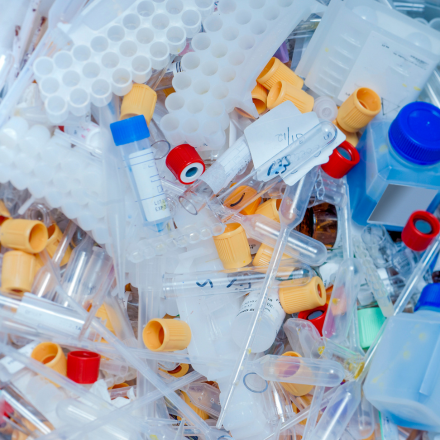
Addressing medication waste: an EU priority for sustainable health systems
Awaiting committee decision: A turning point for the Critical Medicines Act
What our Members say
I have been active in EHMA since the first years of the '90s and I have seen its evolution from a small association of members interested in sharing knowledge on health management practices to the current status of reference and advisory key player for EU, health systems and organisations, stakeholders associations, industry and universities. EHMA is now a unique knowledge hub, policy advisor, community of practice and network of best in class organisations involved in health policy and management. A place where health managers can build their competences, policy-makers and stakeholder associations envision how to implement and sustain change through health management, industry leaders understand how to engage more effectively with health organisations and systems. The right place to nurture and grow health management capabilities and capacity for every stakeholder of health systems.
Prof. Federico Lega, University of Milan, Italy
Health management has a crucial function in shaping public health and health system challenges. The Medical University of Varna, Bulgaria had success in collaborating with EHMA on EU-funded projects that has resourced us to create new health management competencies for the future workforce. In addition to all classical definitions, health management is a science dealing with individuals, groups, and society at large. It is an art contributing to the beauty of our lives and an interactive communication process at all levels of institutions and human energy. I have also had the pleasure to chair the South Eastern European Special Interest Group which gives members a space to discuss and tools to address how health systems are managed in our regions.
Prof. Todorka Kostadinova, Medical University of Varna, Bulgaria
I enjoy the high level of interaction and engagement in EHMA’s activities, in particular during the annual conference where the panel discussions are rich and well prepared. As a hospital manager and professor of health management, EHMA motivates and inspires me to be creative. You go back home feeling energised from seeing old friends and making new connections, as well as being convinced of serving as EHMA’s ambassador. It’s a strong feeling of interdisciplinary engagement, but it also feels like being part of family-like community.
Prof. Sandra C. Buttigieg, University of Malta, Malta
EHMA is a pre-eminent organisation for everyone working in planning, managing and delivering health services across Europe. As a long standing member of EHMA I have always been impressed by the vibrant community of managers, researchers and academics it has created and by the many opportunities for sharing knowledge and funding opportunities it has brought to its members. Its international scope is impressive and its impact is often felt in management and research across European and national health systems.
Prof. Axel Kaehne, Edge Hill University, UK
Health workforce has become more essential in operating, managing and maintaining health systems lately, particularly in crisis and emergency situations. European healthcare professions and the workforce need to be high on the agenda of managers and decision makers. The Health Services Management Training Centre, Semmelweis University in Hungary is a longstanding EHMA member, because it connects us with collaborators and experts, with whom we can have complex debates, from whom we can learn and at the end find solutions in various challenging fields of healthcare management.
Dr Eszter Kovács, Health Services Management Training Centre, Semmelweis University, Hungary
As a hospital administrator and health management professor, I see on a daily basis that the healthcare challenges require talented and skilled managers to transform it. the EHMA membership has been beneficial to bring healthcare management research and education to the demanding healthcare services world, promoting healthcare management competencies and knowledge creation.
Dr Alexandre Lourenco, APAH - Association of Portuguese Hospital Managers, Portugal
Many healthcare systems in Europe and beyond are facing similar challenges which require innovative and creative solutions. EHMA’s annual conference, webinars, Programme Directors’ group and other activities and resources provide incredible opportunities for networking, connecting and sharing experiences. A distinct feature of EHMA is the diversity of members with representation from many countries, sectors and different communities of practice – academic, policy-makers, practitioners, managers, leaders and students. The annual conference is a highlight in the calendar year, offering a friendly, fun and learningful environment for emerging and established members to engage, collaborate and meet up with old and new friends. I am proud to be a member of the EHMA Board.
Prof. Ann Mahon, University of Manchester, UK
Society evolution, pandemics and ageing modify health needs. So, health policies and services are to change dramatically. EHMA, through webinars, workshops and annual conference provides an excellent insight to a professional changing world, favouring closeness to management innovation and the protagonists of these changes. As a primary care services’ manager, participating in EHMA activities is really worth it and allows to involve oneself in the innovation processes.
Dr Antoni Peris Grao, Consorci Castelldefels Agents de Salut (CASAP), Spain