Trilogues on the EU Pharmaceutical Strategy enter a decisive phase
3 November 2025

As trilogues on the EU Pharmaceutical Strategy move forward, co-legislators have a real opportunity to address persistent structural gaps in the proposed Regulation and Directive. EHMA’s latest position paper sets out targeted amendments to make the reform operational, future-proof, and aligned with the EU’s wider digital and resilience strategies.
The European Pharmaceutical Strategy Reform represents a once-in-a-generation opportunity to strengthen patient safety, improve the resilience of medicine supply chains, and make solidarity between Member States work in practice. However, despite improvements made by the European Parliament in its plenary position, significant gaps remain — particularly around hospital-level stock visibility, medication error reporting, and digital interoperability.
Strengthening hospital stock visibility
EHMA urges co-legislators to introduce a legal obligation for National Critical Medicines Stock Visibility Systems (N-CMSVS) in every Member State. These systems would collect near real-time data at hospital level on on-hand quantities by presentation and lot, expiry dates, consumption and purchase orders, and location granularity (hospital, pharmacy, ward).
This measure would ensure interoperability with the European Shortages Monitoring Platform (ESMP) and other Union systems under Regulation (EU) 2022/123, using common technical specifications (Amendments 262, 266, 272).
Why it matters: Hospitals are the frontline of patient care and often the first to experience shortages. Without structured visibility of hospital inventories, authorities cannot allocate fairly, prevent wastage, or protect patients during crises.
Embedding patient safety and error reporting
EHMA welcomes Parliament’s efforts to broaden the definition of adverse reactions to include medication errors (Amendment 223, Regulation Art. 101) and to strengthen reporting obligations across use, administration, and dispensation (Amendments 223, 232–233, Directive Arts. 97, 106–107).
To fully operationalise these measures, co-legislators should ensure that digital medication management systems are embedded as a core patient safety requirement, enabling systematic detection and reporting of errors via Eudravigilance and national authorities.
Ensuring interoperability and legal alignment
The reform must be aligned with the Interoperable Europe Act, the NIS2 Directive, and the Critical Medicines Act to avoid fragmented reporting and ensure cybersecurity by design.
Amendment 223 (Directive) calls for the progressive adoption of digital dispensing, barcode scanning, and automated stock monitoring in hospital and retail pharmacies — ensuring that digitalisation supports safety and supply resilience rather than lagging behind EU frameworks.
Addressing shortages systematically
EHMA supports recognising shortages as a systemic risk (Recital 137 & Amendments 121–129) and calls for hospitals and ambulatory care settings to be legally recognised as key actors in shortage reporting and mitigation, rather than mere downstream recipients.
Embedding hospital-level data into national and EU systems will enable timely and fair allocation of critical medicines during crises.
Governance, funding and accountability
EHMA’s position paper sets out clear governance roles for EMA, the MSSG and national competent authorities, backed by:
- EU and national funding (RRF, EU4Health, Digital Europe)
- Common datasets and standards aligned with ESMP
- Defined KPIs on reporting timeliness, data completeness, error rates and stock-out duration
These measures ensure that digital infrastructure is sustainable, interoperable, and secure by design.
Why this matters
- Public health resilience: Real-time hospital stock visibility and digital error reporting enable authorities to anticipate and mitigate crises.
- Efficiency: EU-wide analysis shows that digitalising hospital medication management yields a 167 % ROI and € 1.96 billion in annual savings.
- Legal coherence: Aligning the pharmaceutical framework with broader EU digital and resilience legislation prevents duplication and fragmentation.
Recent News

New report published: Consolidating infant rsv prophylaxis – evidence and policy guidance for European health systems.
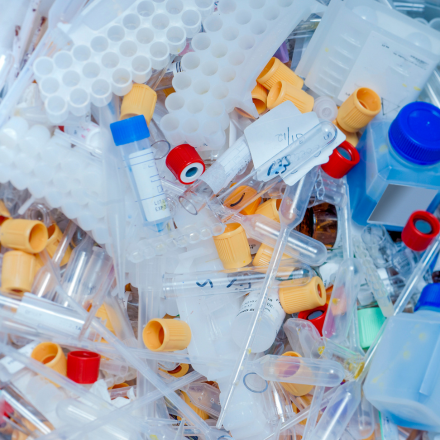
Addressing medication waste: an EU priority for sustainable health systems
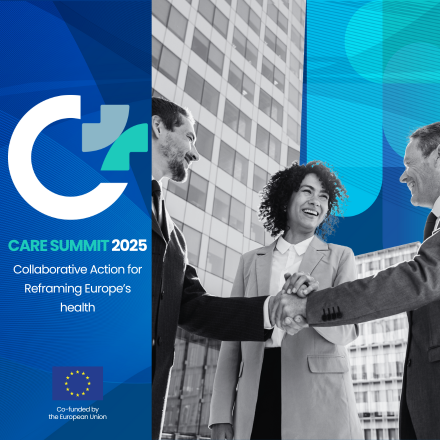
CARE Summit: building a stronger European Health Union
What our Members say
I have been active in EHMA since the first years of the '90s and I have seen its evolution from a small association of members interested in sharing knowledge on health management practices to the current status of reference and advisory key player for EU, health systems and organisations, stakeholders associations, industry and universities. EHMA is now a unique knowledge hub, policy advisor, community of practice and network of best in class organisations involved in health policy and management. A place where health managers can build their competences, policy-makers and stakeholder associations envision how to implement and sustain change through health management, industry leaders understand how to engage more effectively with health organisations and systems. The right place to nurture and grow health management capabilities and capacity for every stakeholder of health systems.
Prof. Federico Lega, University of Milan, Italy
Health management has a crucial function in shaping public health and health system challenges. The Medical University of Varna, Bulgaria had success in collaborating with EHMA on EU-funded projects that has resourced us to create new health management competencies for the future workforce. In addition to all classical definitions, health management is a science dealing with individuals, groups, and society at large. It is an art contributing to the beauty of our lives and an interactive communication process at all levels of institutions and human energy. I have also had the pleasure to chair the South Eastern European Special Interest Group which gives members a space to discuss and tools to address how health systems are managed in our regions.
Prof. Todorka Kostadinova, Medical University of Varna, Bulgaria
I enjoy the high level of interaction and engagement in EHMA’s activities, in particular during the annual conference where the panel discussions are rich and well prepared. As a hospital manager and professor of health management, EHMA motivates and inspires me to be creative. You go back home feeling energised from seeing old friends and making new connections, as well as being convinced of serving as EHMA’s ambassador. It’s a strong feeling of interdisciplinary engagement, but it also feels like being part of family-like community.
Prof. Sandra C. Buttigieg, University of Malta, Malta
EHMA is a pre-eminent organisation for everyone working in planning, managing and delivering health services across Europe. As a long standing member of EHMA I have always been impressed by the vibrant community of managers, researchers and academics it has created and by the many opportunities for sharing knowledge and funding opportunities it has brought to its members. Its international scope is impressive and its impact is often felt in management and research across European and national health systems.
Prof. Axel Kaehne, Edge Hill University, UK
Health workforce has become more essential in operating, managing and maintaining health systems lately, particularly in crisis and emergency situations. European healthcare professions and the workforce need to be high on the agenda of managers and decision makers. The Health Services Management Training Centre, Semmelweis University in Hungary is a longstanding EHMA member, because it connects us with collaborators and experts, with whom we can have complex debates, from whom we can learn and at the end find solutions in various challenging fields of healthcare management.
Dr Eszter Kovács, Health Services Management Training Centre, Semmelweis University, Hungary
As a hospital administrator and health management professor, I see on a daily basis that the healthcare challenges require talented and skilled managers to transform it. the EHMA membership has been beneficial to bring healthcare management research and education to the demanding healthcare services world, promoting healthcare management competencies and knowledge creation.
Dr Alexandre Lourenco, APAH - Association of Portuguese Hospital Managers, Portugal
Many healthcare systems in Europe and beyond are facing similar challenges which require innovative and creative solutions. EHMA’s annual conference, webinars, Programme Directors’ group and other activities and resources provide incredible opportunities for networking, connecting and sharing experiences. A distinct feature of EHMA is the diversity of members with representation from many countries, sectors and different communities of practice – academic, policy-makers, practitioners, managers, leaders and students. The annual conference is a highlight in the calendar year, offering a friendly, fun and learningful environment for emerging and established members to engage, collaborate and meet up with old and new friends. I am proud to be a member of the EHMA Board.
Prof. Ann Mahon, University of Manchester, UK
Society evolution, pandemics and ageing modify health needs. So, health policies and services are to change dramatically. EHMA, through webinars, workshops and annual conference provides an excellent insight to a professional changing world, favouring closeness to management innovation and the protagonists of these changes. As a primary care services’ manager, participating in EHMA activities is really worth it and allows to involve oneself in the innovation processes.
Dr Antoni Peris Grao, Consorci Castelldefels Agents de Salut (CASAP), Spain